Best Uses of Alumina Oxide for Global Buyers?
Alumina Oxide, a versatile material, has become essential for various industries. Its lightweight yet strong properties make it highly sought after. Global buyers are increasingly utilizing Alumina Oxide in applications ranging from aerospace to electronics. This high-performance material offers excellent thermal stability and electrical insulation, which enhances its value in diverse fields.
The growing demand for Alumina Oxide highlights its pivotal role in manufacturing. Industries value its capability to withstand harsh conditions. For instance, in automotive applications, Alumina Oxide’s durability contributes to enhanced safety features. However, buyers must remain cautious regarding sourcing and quality, as not all suppliers meet stringent standards.
Understanding when and where to use Alumina Oxide is crucial for effective application. Some buyers may overlook potential challenges, such as processing techniques. Moreover, while Alumina Oxide seems ideal, not every situation requires its unique properties. Awareness and continuous learning about its capabilities will ensure informed decisions for all global buyers.

Best Uses of Alumina Oxide in the Electronics Industry
Alumina oxide, or aluminum oxide, is increasingly recognized for its diverse applications in the electronics industry. It is widely used as an insulator in electronic devices due to its excellent dielectric properties. According to a report by MarketsandMarkets, the global alumina market for electronics is expected to reach $5.28 billion by 2026, driven by growing demand for advanced electronic components.
One of the notable uses of alumina oxide is in semiconductor manufacturing. Its ability to withstand high temperatures and corrosive environments makes it an ideal substrate material. Recent research highlights that using alumina can enhance the reliability of power electronic devices by up to 30%. This improvement is crucial, as the industry faces increasing challenges related to heat management.
Moreover, alumina serves as an essential component in the production of thin-film transistors and light-emitting diodes (LEDs). The demand for more energy-efficient lighting solutions is pushing manufacturers towards materials that can improve conductivity and heat dissipation. While the benefits of alumina are profound, challenges remain in the processing methods. The need for innovative production techniques is becoming apparent amid fluctuating raw material prices and environmental considerations.
Best Uses of Alumina Oxide in the Electronics Industry
| Application |
Description |
Benefits |
| Insulators |
Used as high-temperature insulators in electronic devices. |
Excellent thermal stability and electrical insulation properties. |
| Substrates |
Serves as a substrate material for semiconductor packaging. |
High thermal conductivity and mechanical strength. |
| Ceramics |
Incorporated into ceramic components for electronics. |
Enhanced durability and resistance to moisture. |
| Coatings |
Applied as protective coatings for electronic circuit boards. |
Improves corrosion resistance and dielectric strength. |
| Thin Films |
Used in the fabrication of thin-film transistors. |
Provides reliable performance and high efficiency in devices. |
Applications of Alumina Oxide in Aerospace Components Manufacturing
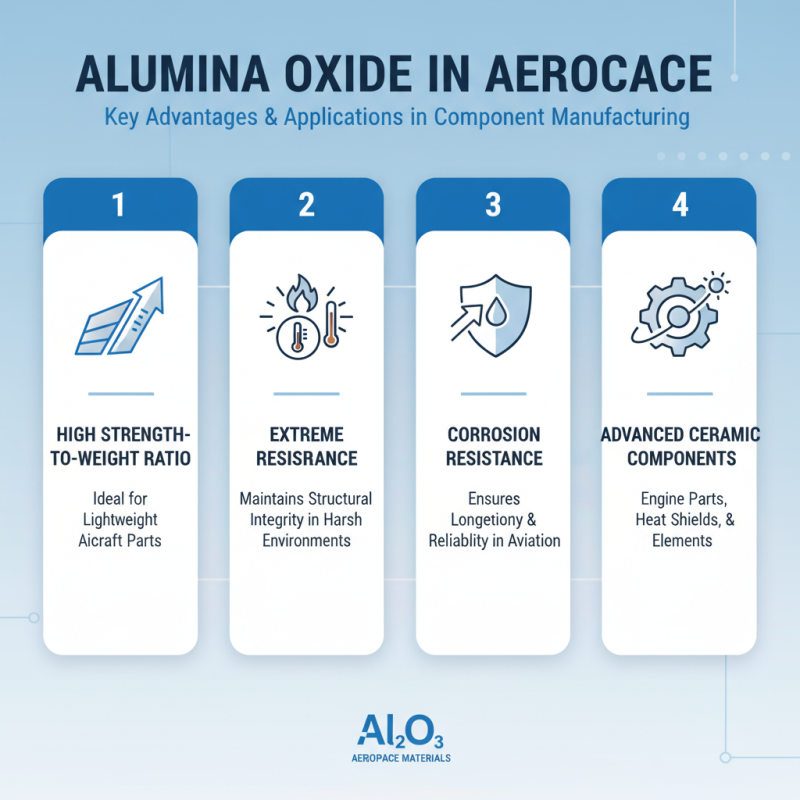
Alumina oxide, also known as aluminum oxide, plays a crucial role in aerospace components manufacturing. Its high strength-to-weight ratio makes it ideal for aircraft parts. In environments with extreme temperatures, alumina oxide maintains structural integrity. This material resists corrosion effectively, ensuring longevity in aviation applications.
In the manufacturing process, alumina oxide is used in various forms, such as ceramics and coatings. These forms can enhance the toughness of components. For instance, turbine blades coated with alumina oxide exhibit improved wear resistance. This application helps in maintaining performance under harsh conditions. However, achieving the perfect coating can be challenging and may require multiple trials.
The precision required in aerospace demands attention to detail. Variations in alumina oxide can affect component performance. It is vital to monitor the quality closely during production. Even slight discrepancies can lead to significant issues later. Hence, ongoing research into alumina oxide methods is essential for refinement and efficiency.
Utilization of Alumina Oxide for Advanced Ceramic Materials
Alumina oxide plays a pivotal role in the production of advanced ceramic materials. Its exceptional hardness and heat resistance make it a preferred choice in various industries. According to the Ceramic Industry Report 2022, alumina ceramics account for over 30% of the global ceramic market. This figure highlights its importance in applications ranging from electronics to aerospace.
In electronic components, alumina oxide is often used as an insulator. It can withstand high temperatures and harsh environments, ensuring reliability. Research indicates that devices using alumina components can improve performance by 20% compared to those using less robust materials. However, manufacturing high-purity alumina is not without challenges. Variability in the processing stages can lead to inconsistencies in material properties, underscoring the need for careful quality control.
Moreover, alumina's versatility allows it to be utilized in cutting tools and wear-resistant coatings. The global demand for these applications continues to rise. A market analysis showed that the demand for alumina is projected to grow at a CAGR of 8% from 2023 to 2030. Despite its advantages, companies must continuously innovate to address the limitations of alumina, such as brittleness under certain conditions. This ongoing reflection on material performance is essential for future advancements.
Role of Alumina Oxide in Catalysts for Chemical Processing
Alumina oxide, known for its unique properties, plays a crucial role in chemical processing. Its high thermal stability makes it an excellent support material in catalytic converters. The ability to withstand extreme temperatures enhances the performance of catalysts, promoting more efficient reactions.
In chemical processes, alumina enhances catalytic activity. It provides a large surface area for reactions, allowing for better interaction between reactants. This property is vital in facilitating complex chemical transformations. Additionally, its porous structure can trap impurities, improving the overall efficiency.
There's room for improvement in the usage of alumina oxide. Researchers continue to explore its potential applications further. Some may focus on how the material can be enhanced for better durability under varying conditions. Experimentation in combining alumina with other materials may yield innovative results, contributing to advancements in the field of catalytic chemistry.
Impact of Alumina Oxide in Abrasives and Coatings Industries
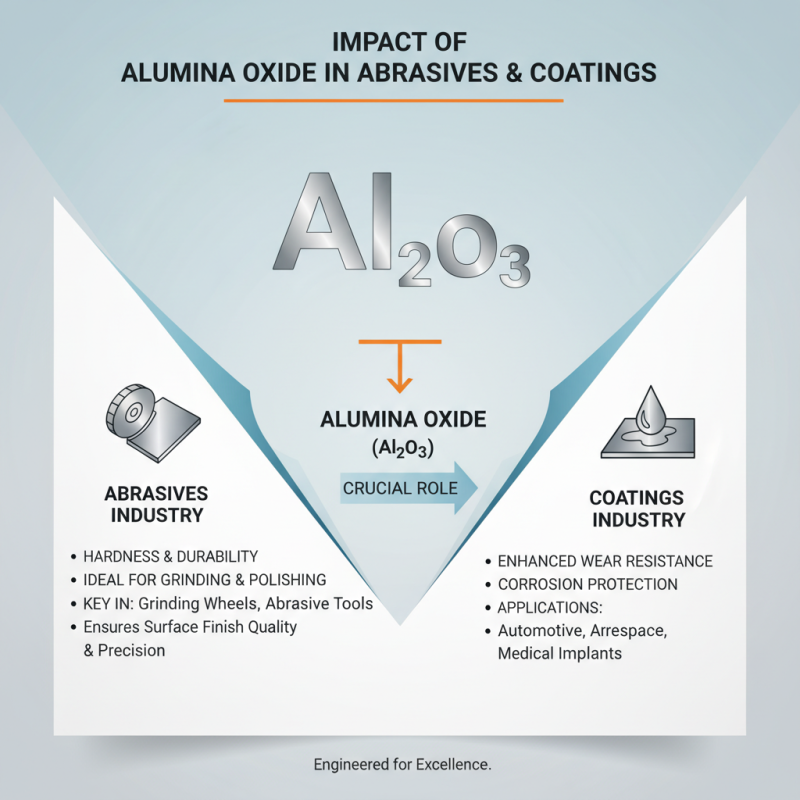
Alumina oxide plays a crucial role in various industries, especially in abrasives. Its hardness and durability make it an ideal material for grinding and polishing applications. In fact, alumina oxide is often used to create grinding wheels, discs, and other abrasive tools. These tools are vital in manufacturing processes, ensuring surface finish quality and precision.
The coatings industry also benefits significantly from alumina oxide. It provides excellent wear resistance and enhances the lifespan of coated surfaces. When incorporated into coatings, it improves adhesion and durability. Such enhancements are essential for products subjected to harsh conditions. However, using alumina oxide comes with challenges. The sourcing and processing can be complex, impacting cost and availability.
Users must weigh the benefits against these potential drawbacks. Ensuring proper application techniques is crucial. Misapplication could lead to subpar results or increased wear. As industries evolve, ongoing research may yield new methods to harness alumina oxide more effectively and sustainably. Balancing innovation with practical limitations remains key in utilizing this versatile material.