What Are the Top Types of White Alumina?
White alumina is not one uniform material. Its performance changes with purity, crystal size, porosity, and manufacturing temperature. In industry, the term Alumina White commonly describes high-purity aluminum oxide products with a clean white appearance. The main categories include white fused alumina, calcined alumina, tabular alumina, reactive alumina, and fine white aluminum oxide powders. Each type serves a different purpose, from abrasive grains and refractory linings to ceramics, polishing compounds, and thermal applications.
The U.S. Geological Survey’s Mineral Commodity Summaries 2024 identifies alumina as a major industrial material supporting aluminum, refractory, ceramic, and chemical production. However, public production statistics rarely separate white fused grades from other alumina forms. That limitation matters. It makes direct market comparisons less precise. Grand View Research and MarketsandMarkets both report continued demand for high-purity alumina in advanced ceramics, electronics, and industrial processing. Their findings also indicate that purity and particle engineering increasingly influence product selection.
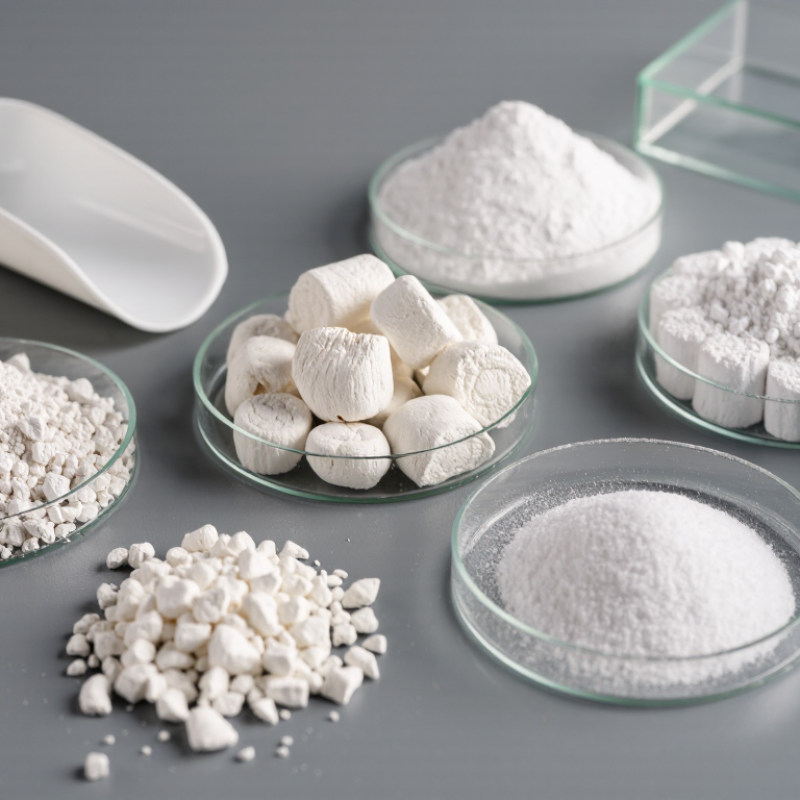
White fused alumina is valued for hardness and controlled angular grains. Calcined alumina offers stable chemistry and broad refractory use. Tabular alumina provides low porosity and strong thermal-shock resistance. Reactive alumina supports dense ceramic bodies and smoother surface finishes. Fine grades can look similar in a sample tray, yet behave differently during mixing, firing, or blasting. That small visual similarity can mislead buyers. A better evaluation checks chemical purity, particle-size distribution, bulk density, and application temperature. Standards and supplier data should be compared carefully, because naming practices vary across regions. Even this overview needs refinement: “top” may mean highest volume, best performance, or lowest processing cost.
Natural White Fused Alumina: Properties and Common Applications
Natural White Fused Alumina: Properties and Common Applications
“Natural white fused alumina” needs careful wording.
White fused alumina is manufactured, not mined as a finished abrasive. Producers fuse high-purity alumina in an electric arc furnace, then crush, clean, and grade it. The material typically contains more than 99% Al2O3, although purity varies by source and processing. It has a Mohs hardness near 9 and a melting point around 2,050°C. It is white, angular, and chemically stable.
The USGS Mineral Commodity Summaries 2024 reported approximately 142 million metric tons of global alumina refinery production in 2023. However, the report does not separate white fused alumina from other alumina products.
That limitation matters. Market estimates can look precise while covering different product definitions.
In practical use, white fused alumina supports ceramic shaping, refractory castables, precision blasting, and bonded abrasives. Its low iron content helps reduce surface discoloration on stainless steel, glass, and technical ceramics.
Grain size changes performance.
Coarse particles remove material aggressively, while fine powders create smoother finishes.
I have found that users often select purity first and ignore particle distribution. That choice can reduce cutting efficiency.
Moisture, furnace history, and magnetic contamination also deserve inspection. A certificate alone is not enough; sieve analysis and application trials remain important. Oversimplified specifications sometimes hide real process differences.
Tabular White Alumina: Structure, Performance, and Refractory Applications
Tabular white alumina is a high-purity refractory aggregate made from sintered alumina. It contains mainly alpha-alumina crystals, often above 99% Al2O3. During firing, the material develops large, plate-like grains with limited open porosity. This structure supports strong resistance to slag, abrasion, and thermal deformation.
It performs well under severe heat. Typical grades show bulk density near 3.5 g/cm³ and apparent porosity commonly around 2–5%, depending on processing and sizing.
These figures should be checked against the supplier’s test method. ASTM C20 is often used for density and porosity testing. Small differences matter.
A castable can fail because of pore distribution, not just chemical purity.
Industry scale gives this material wider context. The International Aluminium Institute reported global alumina production of roughly 140 million tonnes in 2023, showing the importance of controlled alumina supply. The U.S. Geological Survey’s Mineral Commodity Summaries 2024 also highlights alumina and aluminum as globally significant industrial materials.
In practice, tabular white alumina is used in steel ladle linings, cement kiln zones, burner blocks, refractory bricks, and high-temperature kiln furniture.
Its low impurity content helps reduce unwanted glassy phases. Its angular grains improve packing, but they can increase mixing demand.
That point is sometimes overlooked. Performance depends on grain size, binder selection, installation, and firing conditions—not alumina content alone.
White Alumina Powders: Grades, Particle Sizes, and Uses
What Are the Top Types of White Alumina?
White alumina powders differ mainly by grade, purity, and particle size. Fused white alumina commonly contains over 99% aluminum oxide, with iron and silica controlled at low levels. Its angular grains cut aggressively during abrasive blasting and grinding. Fine powders create smoother ceramic surfaces, while coarse grains remove coatings faster. The boundary is not always clean.
Particle size decides performance. FEPA abrasive standards classify macrogrits from coarse sizes, such as F16, to finer grades, such as F120. Micron powders are often specified by D50 values, such as 20 or 5 micrometres. A 20-micrometre powder may suit polishing compounds, while a 5-micrometre grade can support precision lapping. Always check the certificate, because nominal mesh size can hide a broad particle distribution.
According to the U.S. Geological Survey Mineral Commodity Summaries 2024, global primary aluminium production reached approximately 70 million metric tons in 2023. This figure does not measure white alumina directly, but it shows the scale of the upstream aluminium system supporting specialty oxides. Industry testing reports usually focus on chemical purity, bulk density, hardness, and magnetic contamination. In practice, a ceramics engineer may choose high-purity fine powder for electronic substrates, while a refractory producer may prefer coarser grains for thermal shock resistance. Small differences matter. Humidity, packaging, and milling history can change flow behavior before processing begins.
What Are the Top Types of White Alumina? - White Alumina Powders: Grades, Particle Sizes, and Uses
| Type or grade |
Typical particle size |
Key characteristics |
Common uses |
| Coarse white fused alumina grain |
About 0.2–4 mm; commonly supplied in graded abrasive grit sizes |
Angular, hard grains with strong cutting action; particle distribution depends on the grit specification |
Blast cleaning, abrasive tools, surface preparation, and refractory aggregate |
| Fine abrasive grit |
Approximately 45–2,000 µm, depending on the selected grit grade and grading system |
Controlled grain sizes for consistent material removal; finer grades generally produce finer finishes |
Coated abrasives, bonded grinding wheels, honing, and blasting |
| White alumina microgrit |
Typically below about 63 µm; finer grades can be a few micrometres |
Fine, classified abrasive powder; exact size limits vary by standard and supplier specification |
Precision lapping, fine polishing, and finishing of hard materials |
| White alumina polishing powder |
Often around 1–20 µm, with grades selected for the required finish |
Fine particles suited to controlled polishing; performance also depends on particle shape and slurry conditions |
Polishing and lapping of metals, ceramics, glass, and optical components |
| Refractory-grade white alumina |
Available as coarse aggregate, intermediate fractions, and fine powder |
Alumina-rich material selected for refractory formulations; chemistry and grain distribution are grade-specific |
Refractory castables, ramming mixes, kiln furniture, and other high-temperature products |
| High-purity white fused alumina |
Supplied in grit, microgrit, or powder sizes |
A purity-focused grade; alumina content and impurity limits must be checked against the product specification |
Precision abrasives, technical ceramics, and applications requiring controlled impurity levels |
Particle-size ranges are indicative, not interchangeable across standards. Confirm the applicable grading system, size distribution, and chemical specification for the intended application.