How to Understand Silicon Carbide Meaning in 2026?
Understanding Silicon Carbide Meaning in 2026 requires more than defining a chemical compound. Silicon carbide, or SiC, combines silicon and carbon in a crystal structure with exceptional thermal conductivity, electrical strength, and switching efficiency. In practical terms, it helps power devices waste less energy as heat. Picture an electric vehicle inverter operating under heavy load. SiC components can handle that demanding environment with smaller cooling systems and reduced energy loss.
Industry data shows why this meaning matters now. Yole Group’s 2024 analysis projected the silicon carbide power-device market could approach $10 billion by 2030, driven by electric vehicles, renewable energy, and fast-charging infrastructure. The International Energy Agency also reported that global electric-car sales exceeded 17 million in 2024. That growth increases demand for efficient power conversion. Still, market forecasts are not guarantees. Manufacturing defects, wafer costs, and supply-chain pressure remain serious concerns.
Dr. John Palmour, Wolfspeed’s co-founder and chief technology officer, has described silicon carbide as “a disruptive technology.” His statement captures the material’s industrial importance, but it needs context. SiC does not automatically improve every circuit. Engineers must balance voltage ratings, switching frequency, packaging, reliability, and total system cost. The phrase Silicon Carbide Meaning therefore includes both material science and real-world engineering judgment. A useful explanation should connect the microscopic crystal lattice with the visible results: cooler cabinets, lighter inverters, and longer operating cycles. Some claims still sound overly optimistic. Careful readers should examine test conditions, report dates, and independent verification before accepting them.

What Silicon Carbide Means: Definition, Formula, and Core Properties
Silicon carbide, written as SiC, is a compound formed from silicon and carbon in a one-to-one atomic ratio. Its name describes its chemistry, not a single industrial grade. Strong covalent bonds create a hard crystal structure. Most technical grades use different crystal arrangements, called polytypes. The common 4H-SiC polytype is widely studied for power electronics.
Its core properties explain the growing interest. The U.S. Department of Energy reports a bandgap near 3.26 eV, a breakdown field roughly ten times higher than silicon, and thermal conductivity about three times higher. These figures support smaller, faster, and more heat-tolerant power devices. Silicon carbide also reaches about 9 to 9.5 on the Mohs hardness scale. It resists wear, corrosion, and high-temperature oxidation, although processing it remains difficult and costly.
The International Energy Agency’s Global EV Outlook 2024 recorded almost 14 million electric car sales in 2023. That expansion increases demand for efficient power conversion materials. Yet market language can oversimplify SiC. High voltage performance does not remove defects, packaging limits, or cooling requirements. The material is powerful, but not automatically superior in every circuit. Engineers must match its formula and properties with switching frequency, voltage, temperature, and manufacturing capability.
How to Understand Silicon Carbide Meaning in 2026?
Silicon carbide (SiC) is a compound made of silicon and carbon atoms. Its chemical formula is SiC. Different crystal structures, known as polytypes, give SiC distinct electronic properties.
Chart explanation: The bandgap is the energy required for an electron to move into the conduction band. Silicon carbide is a wide-bandgap semiconductor: its common polytypes have bandgaps from approximately 2.36 to 3.26 eV, helping SiC operate at higher temperatures and electric fields than conventional narrow-bandgap semiconductors.
Core properties of SiC: It has high hardness, high thermal conductivity, strong chemical stability, and a high breakdown electric field. These properties make silicon carbide useful for high-temperature, high-power, and high-frequency applications.
How Silicon Carbide Is Produced and Classified
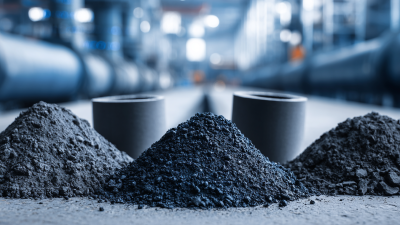
Silicon carbide is produced by combining silica sand or quartz with carbon, commonly petroleum coke, inside an electric resistance furnace. Temperatures can exceed 2,000°C. The reaction forms rough SiC crystals, while gases and unused carbon separate during cooling. This traditional process remains energy intensive, and furnace control affects crystal size, purity, and final performance.
Classification begins with crystal type. Black silicon carbide usually contains more impurities and suits abrasive applications. Green silicon carbide has higher purity and supports precision grinding, ceramics, and selected semiconductor processes. Producers also classify material by grain size, powder size, purity, bulk density, and crystal structure. The terms α-SiC and β-SiC describe different crystal arrangements. In practice, specifications can overlap. That creates confusion for buyers.
Demand classification is changing, too. The International Energy Agency reported more than 17 million electric-car sales worldwide in 2024. This growth increases interest in SiC power devices, which operate efficiently at higher temperatures and voltages. However, a larger electric-vehicle market does not automatically mean every SiC grade is suitable for electronics. Yole Group’s 2024 power-SiC analysis separates device demand from abrasive and industrial demand. That distinction matters. A grain-size label alone cannot prove semiconductor quality. USGS mineral data also emphasizes that raw-material supply, processing capacity, and purity influence market reliability. Some published estimates remain difficult to compare. Different reports use different definitions.
Why Silicon Carbide Matters in Modern Technology
How to Understand Silicon Carbide Meaning in 2026?
Silicon carbide is more than a hard ceramic used in industrial tools. In modern technology, it is a semiconductor that can handle high voltage, heat, and electrical stress. Its wide bandgap supports efficient power conversion with smaller cooling systems. That matters in electric vehicles, renewable-energy inverters, charging equipment, and data-center power supplies. A lighter converter can create more room for batteries or useful computing hardware.
Tips: Check the voltage range, switching frequency, thermal design, and package quality before choosing silicon carbide. Do not judge performance from the material alone. Circuit layout and gate control matter greatly. Test heat flow near real operating conditions, not only in a clean laboratory setup.
Silicon carbide can reduce energy losses during repeated power switching, but it is not a magic solution. Engineers still face material defects, higher component costs, difficult assembly, and sensitive control requirements. Reliability depends on the entire system, including connections, insulation, cooling, and protection circuits. This point is easy to overlook. In 2026, its meaning is best understood as an enabling material, not a universal replacement for silicon. The right application may gain efficiency and durability. A poorly designed system may gain little, or even create new thermal problems. Continued testing, published measurements, and careful standards-based evaluation remain essential.
Where Silicon Carbide Is Used Across Key Industries
How to Understand Silicon Carbide Meaning in 2026?
Where Silicon Carbide Is Used Across Key Industries
Silicon carbide, or SiC, is a hard compound with strong thermal and electrical properties. In 2026, its meaning extends beyond a laboratory material. It supports smaller power systems, faster switching, and improved heat management. Its wide bandgap allows devices to operate at higher temperatures and voltages. This matters in electric vehicles, where SiC power modules help control energy between batteries, motors, and charging systems. Engineers also use SiC in charging stations, especially where compact cabinets and reduced cooling demand are valuable.
Renewable energy is another major field. Solar inverters and wind power converters use SiC components to manage changing electrical loads. Grid equipment can benefit from lower switching losses and more efficient power conversion. Industrial factories apply SiC in motor drives, welding equipment, and high-temperature heating systems. Its ceramic form also appears in abrasives, kiln furniture, mechanical seals, and protective components. Aerospace and defense-related engineering may use it for demanding thermal environments, but design verification remains essential. SiC is not automatically better. Packaging, insulation, cooling paths, and operating conditions can change the result.
Tips: Check the full system, not only the semiconductor. Compare efficiency at real loads, measure junction temperature, and review long-term reliability data. A smaller converter may still need stronger thermal design. Early testing often reveals uncomfortable compromises.
The material still has limits. Manufacturing quality, defect control, and switching noise require careful attention. Engineers should question optimistic efficiency figures. Practical performance depends on the complete design.
What to Know About Silicon Carbide Developments in 2026
How to Understand Silicon Carbide Meaning in 2026?
In 2026, silicon carbide means more than a hard ceramic used in abrasives. It is a wide-bandgap semiconductor for managing electrical power. Its structure supports higher voltage, faster switching, and operation at elevated temperatures. These benefits matter in electric vehicles, solar inverters, charging systems, and data center power supplies. Smaller cooling systems may become possible.
Recent development is moving toward larger wafer sizes, improved crystal quality, and more reliable device packaging. Manufacturers are also studying thinner layers and better gate control. These changes could reduce energy losses during repeated switching. However, production remains technically demanding. Defects inside the crystal can affect yield and long-term reliability.
From an engineering perspective, SiC performance depends on the complete system, not only the semiconductor. Circuit layout, insulation, thermal paths, and protection software all influence results. A device may switch efficiently but create difficult electromagnetic noise. Designers must test it under heat, vibration, humidity, and rapid load changes. I would not call SiC a universal replacement for silicon. Cost, supply capacity, and application requirements still shape the decision. The picture is promising, but unfinished. In 2026, careful measurement matters more than impressive specifications.