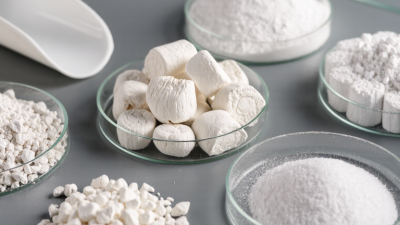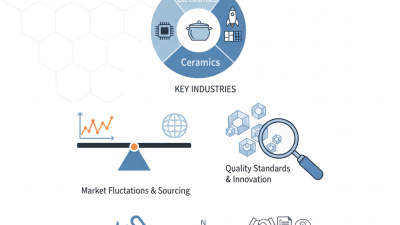
Choosing High Purity Alumina for global sourcing is not simply a purity contest. It is a supply-chain decision involving feedstock, processing, certification, logistics, and customer qualification. A bright white powder may look identical under factory lighting. Its trace sodium, iron, calcium, and moisture levels can tell a different story.
The U.S. Geological Survey’s Mineral Commodity Summaries 2025 estimates global alumina production at roughly 145 million metric tons in 2024. However, conventional alumina and High Purity Alumina serve different markets. HPA requires tighter impurity control and more demanding process validation. The International Energy Agency’s Global Critical Minerals Outlook 2024 also highlights concentration risks across battery-related supply chains. Buyers should therefore examine refinery location, energy exposure, export conditions, and backup capacity.
Iggy Tan, Managing Director of Altech Batteries, described HPA as “a critical material for the future of energy storage.” His point deserves practical interpretation. A battery-grade supplier must prove consistency, not merely advertise 4N or 5N purity. Request batch certificates, particle-size data, calcination conditions, and independent laboratory results. Ask how deviations are handled.
Supplier audits reveal details that brochures hide. Look for sealed packaging, controlled humidity, labeled sampling points, and retained reference samples. Confirm whether the quoted price includes testing, insurance, and delivery. It does not always.
This guide compares production routes, purity grades, documentation, lead times, and total landed cost. It also questions a common assumption: the lowest unit price may become the most expensive choice after qualification delays, rejected batches, or forced reformulation.
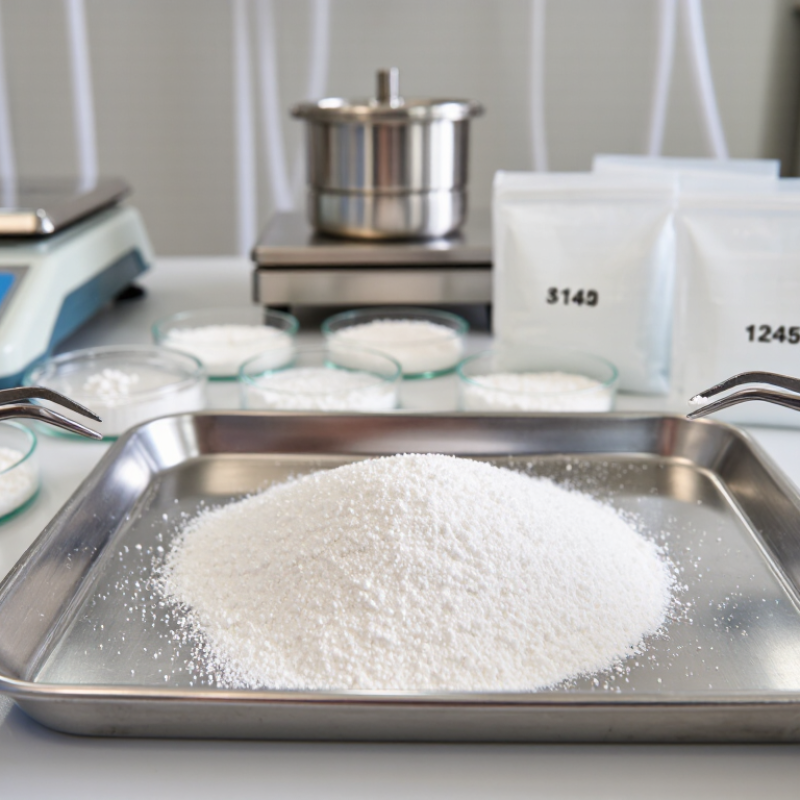
High purity alumina, or HPA, contains at least 99.99% aluminium oxide. Higher grades may reach 99.999%. Small impurity levels can still affect performance. Sodium, iron, calcium, and silica may change crystal growth, insulation, or battery stability. USGS Mineral Commodity Summaries 2024 reports global alumina production at approximately 140 million tonnes in 2023. However, conventional alumina is not equivalent to HPA. Buyers must verify the difference.
HPA supports sapphire substrates, LED components, ceramic insulators, semiconductor equipment, and battery separator coatings. The International Energy Agency reported that electric-vehicle battery demand exceeded 750 GWh in 2023. This growth increases interest in ceramic-coated separators, where particle size, surface treatment, and moisture control matter. Yet, HPA is not the only performance factor. A perfect purity number can still hide weak process control.
Tips: Request recent certificates of analysis and batch-level traceability. Check Na2O, Fe2O3, SiO2, moisture, particle-size distribution, and calcination temperature. Ask for test methods, not only final numbers. Confirm packaging for long-distance shipping. A sealed inner liner can prevent moisture pickup. Pilot testing remains essential. Lab results may not match production behavior. Procurement teams should compare at least three batches before approving a global source.

How to Choose High Purity Alumina for Global Sourcing?
Defining Purity Requirements for Different Manufacturing Processes
High purity alumina should be selected by process risk, not by purity percentage alone. A ceramic insulator may perform well with 99.5% alumina. Sapphire growth usually demands 99.99% or higher purity. Trace sodium, iron, silicon, calcium, and magnesium can change electrical, optical, or thermal performance. Ask suppliers for actual impurity limits, not only a headline grade. Small differences matter.
Particle size and morphology also influence production results. Fine powder can improve sintering, but it may increase dust and handling difficulties. Granulated powder may flow better during pressing. Calcination temperature affects surface area, phase composition, and shrinkage. For battery separators or electronic ceramics, moisture and loss on ignition deserve specific limits. For optical applications, gas release and inclusions require closer control.
A reliable sourcing process compares certificates of analysis with independent test results. Check lot traceability, packaging protection, sampling methods, and storage conditions. A sealed bag does not guarantee perfect material. Humidity can still affect powder behavior after opening. Request a production sample before approving a large shipment. The specification may still be incomplete. Review it after each trial, especially when changing particle size or processing temperature. Cost should be evaluated against scrap, downtime, and qualification risk. The cheapest powder is rarely the cheapest decision.
How to Choose High Purity Alumina for Global Sourcing?
Choosing high purity alumina requires more than checking the alumina percentage. Common grades include calcined alumina, reactive alumina, tabular alumina, and spherical powder. Calcined grades offer thermal stability, while reactive grades support dense ceramic bodies. Form also matters. Powder suits pressing and casting. Granules improve feeding and reduce dust. Pellets or beads may fit thermal or filtration applications.
Particle size should match the process, not just the product label. Check D10, D50, and D90 values instead of relying on “fine” or “ultrafine.” A narrow distribution can improve packing, but a wider distribution may reduce voids in some formulations. Review morphology, BET surface area, tap density, moisture, and loss on ignition. Impurity limits for sodium, silicon, iron, calcium, and magnesium should be stated clearly. Request recent batch test reports and independent verification when the material is critical.
Tips: Define the end-use temperature, forming method, and required purity before requesting quotations. Ask for samples from multiple lots. Compare actual test results, packaging quality, lead time, and export documentation. A low price can look attractive, yet unstable particle size may increase processing waste. I have learned that a complete specification sheet can still omit handling behavior. Leave room for testing, questioning, and revising the purchase criteria.
When sourcing high purity alumina globally, supplier evaluation should go beyond price and purity claims. Request recent test reports showing alumina content, sodium levels, particle size, and moisture. Compare results from different production lots. One sample is not enough.
Production capacity also needs practical verification. Ask about annual output, current utilization, backup equipment, and expansion plans. A large stated capacity may not reflect available supply. Check lead times for normal and peak periods. During a factory review, observe raw material storage, powder handling, packaging, and batch labeling. These details often reveal process discipline. I have found that capacity discussions become clearer when suppliers share shipment records and production schedules, although these documents may still require independent checks.
Confirm whether quality systems cover incoming materials, process controls, final inspection, and complaint handling. ISO certification can support confidence, but it does not replace an audit. Request traceability from each shipment back to its production batch. Define acceptance limits before ordering. Keep a retained sample for comparison. Do not ignore small inconsistencies in certificates. They may be harmless, or they may signal weak document control. Also review supply continuity, export experience, technical communication, and contingency planning. A supplier with excellent laboratory results may still struggle with stable monthly deliveries. Availability matters.
Choosing high-purity alumina for global sourcing requires more than comparing purity percentages. Verify the certificate of analysis for alumina content, sodium, iron, silicon, moisture, and particle-size distribution. Request recent batch data, not only a standard specification sheet. Test an independent sample when the material will enter a sensitive ceramic or electronic process.
Certification checks should match your destination markets and internal quality procedures. Confirm certificate scope, issuing body, validity dates, and traceability records. Ask how nonconforming batches are handled. A polished certificate can still hide inconsistent production controls. That is worth challenging.
Logistics can change the real purchase price. Review packaging strength, moisture protection, pallet dimensions, container loading, and port handling. Clarify Incoterms, insurance responsibilities, customs documents, and expected transit time. Compare landed cost rather than the quoted unit price. A cheaper shipment may become expensive after storage, demurrage, or emergency air freight.
Long-term supply reliability needs practical evidence. Examine production capacity, maintenance planning, quality-control staffing, and historical lead times. Ask whether the supplier can reserve capacity during demand spikes. Maintain written change-notification rules for raw materials, equipment, and manufacturing sites. A second qualified source may protect production, but switching costs are often underestimated. I have seen procurement plans focus heavily on price and overlook moisture exposure during storage. That mistake deserves review before signing a multi-year agreement.
| Evaluation Dimension | Recommended Benchmark or Requirement | Documents or Evidence to Request | Why It Matters in Global Sourcing | Buyer Action |
|---|---|---|---|---|
| Alumina Purity | Confirm whether the application requires 99.5%, 99.9%, 99.99%, or 99.995% Al₂O₃. High-purity technical grades commonly use a stated minimum purity rather than a single universal grade. | Lot-specific Certificate of Analysis (CoA), independent laboratory report, and documented test methods such as ICP-OES or ICP-MS. | Trace impurities can affect electrical insulation, optical performance, sintering behavior, corrosion resistance, and battery-related applications. | Specify purity as a minimum value and define maximum limits for each critical impurity. |
| Critical Impurities | Set limits for elements such as Na, Fe, Si, Ca, Mg, K, and Ti according to the end-use specification. The correct limit depends on the application and processing route. | Full elemental analysis, detection limits, sampling procedure, and a signed release specification. | Small changes in alkali or transition-metal content can influence dielectric loss, color, phase formation, and product consistency. | Review at least three consecutive production lots before approving a supplier. |
| Particle Size and Distribution | Match D50, D90, and distribution width to the forming and sintering process. A typical specification may use micrometre-scale powder, but the target must be application-specific. | Laser diffraction report, sampling plan, dispersion method, and batch-to-batch particle-size records. | Particle distribution affects packing density, flowability, green strength, shrinkage, and final ceramic density. | Approve a controlled particle-size range rather than relying only on an average value. |
| Crystal Phase | Confirm whether the product is transitional alumina or alpha-alumina and identify any phase restrictions for the application. | X-ray diffraction (XRD) pattern, phase identification, and thermal-treatment history. | Phase composition influences surface area, reactivity, sintering temperature, hardness, and thermal stability. | Make phase composition a mandatory line item in the technical data sheet. |
| Loss on Ignition and Moisture | Define maximum moisture and loss-on-ignition values suitable for storage, blending, pressing, coating, or slurry preparation. | Moisture test, loss-on-ignition result, packaging date, and storage-condition record. | Excess moisture can cause agglomeration, inconsistent dosing, poor flow, and altered rheology. | Define retest conditions and maximum storage time before use. |
| Quality Certifications | Prefer a quality management system certified to ISO 9001:2015. Environmental or occupational-safety certifications may be relevant but do not replace product testing. | Current certificate, certification scope, issuing body, expiry date, and audit status. | A certificate demonstrates system controls, but it is not proof that every shipment meets the buyer’s purity specification. | Verify certificates through the issuing organization and compare the scope with the actual product. |
| Regulatory and Safety Documentation | Provide a current Safety Data Sheet (SDS) aligned with the destination market’s chemical communication requirements. | SDS, technical data sheet, product classification, transport statement, and applicable customs information. | Correct documentation reduces customs delays, workplace risks, and misclassification issues. | Check documentation against the importing country before issuing the purchase order. |
| Packaging and Contamination Control | Use sealed moisture-resistant bags or drums with clean, traceable outer packaging. Packaging weight should match the buyer’s handling system. | Packaging specification, tamper evidence, palletization details, cleanliness controls, and net/gross weight records. | Poor packaging can introduce moisture, foreign particles, damaged bags, and unplanned repacking costs. | Approve packaging samples and define acceptance criteria for damaged or wet shipments. |
| Logistics and Incoterms | Compare quotations on the same Incoterms® rule, shipment size, port pair, currency, and validity period. | Commercial invoice, packing list, certificate of origin where required, bill of lading, and agreed Incoterms® 2020 term. | A low unit price may become expensive after freight, insurance, port charges, duties, inland transport, and handling. | Calculate landed cost per usable kilogram, not only the quoted ex-works price. |
| Indicative Pricing | High-purity alumina pricing varies significantly by purity, particle size, phase, volume, packaging, energy costs, and freight. Indicative market discussions may range from approximately US$1–10/kg for bulk technical grades, while specialty nanoscale or extremely high-purity grades can be substantially higher. | Formal quotation with validity period, minimum order quantity, payment terms, freight basis, and surcharge conditions. | Price comparisons are meaningful only when specifications and delivery terms are equivalent. | Treat price ranges as budgeting references and obtain current, specification-matched quotations before contracting. |
| Lead Time and Capacity | Assess normal lead time, peak-season lead time, monthly capacity, and allocation policy. Require written notice for material capacity changes. | Capacity statement, production schedule, historical delivery records, and confirmed order acknowledgment. | Stable lead times are essential for continuous production and safety-stock planning. | Measure on-time delivery performance over multiple quarters. |
| Supply Continuity | Look for documented raw-material sourcing, preventive-maintenance planning, backup production arrangements, and transparent change-control procedures. | Business continuity plan, change-notification procedure, quality agreement, and evidence of alternate logistics routes. | A technically suitable material is not commercially reliable if supply interruptions stop the buyer’s production line. | Use dual sourcing or maintain an agreed safety stock for critical applications. |
| Traceability and Claims Handling | Each shipment should be traceable to a production lot, test record, packaging date, and shipping document. | Lot code, CoA, inspection report, nonconformance procedure, and agreed response time for complaints. | Traceability enables faster root-cause analysis, controlled recalls, and objective resolution of quality disputes. | Include inspection, replacement, credit, and dispute-resolution terms in the supply agreement. |
Note: Pricing, lead times, freight charges, duties, and availability are market-dependent and should be verified through current quotations for the required specification, destination, order volume, and delivery terms.